 GeoGuess
Fifty-four sovereign countries drive on the left, plus about 22 territories and dependencies, so roughly 76 places in total. The best known are the United Kingdom, Ireland, Japan, India, Australia, New Zealand, South Africa, Kenya, Thailand, Indonesia, Malaysia and Jamaica.
Left-hand traffic is a minority rule by country count but not by head count: with India, Indonesia, Pakistan, Bangladesh and Japan all on that side, it covers around a third of the world's population. For a photo round it is one of the most valuable facts you can pull out of an image, because confirming it leaves you with about a quarter of the world's countries, clustered in East and Southern Africa, South and Southeast Asia, the Caribbean and the Pacific.
The full list
Sovereign countries (54)
Europe (4). Every left-driving country in Europe is an island. There is no left-hand traffic anywhere on the European mainland.
| Country | Notes |
|---|---|
| Cyprus | The whole island keeps left, including Northern Cyprus and the UK base areas |
| Ireland | Shares the island with Northern Ireland, also left |
| Malta | |
| United Kingdom | Gibraltar is the exception and drives on the right |
Africa (14). A solid block down the east and south of the continent.
| Country | Notes |
|---|---|
| Botswana | |
| Eswatini | |
| Kenya | |
| Lesotho | Enclave inside South Africa |
| Malawi | |
| Mauritius | |
| Mozambique | Former Portuguese colony that never switched |
| Namibia | Switched to the left after the First World War, under South African administration |
| Seychelles | |
| South Africa | |
| Tanzania | |
| Uganda | |
| Zambia | |
| Zimbabwe |
Asia (14).
| Country | Notes |
|---|---|
| Bangladesh | |
| Bhutan | |
| Brunei | |
| India | |
| Indonesia | Never a British colony |
| Japan | Never a British colony |
| Malaysia | |
| Maldives | |
| Nepal | |
| Pakistan | |
| Singapore | |
| Sri Lanka | |
| Thailand | Never a British colony; borders three right-driving countries |
| Timor-Leste | Switched back to the left in 1976 |
Oceania (10).
| Country | Notes |
|---|---|
| Australia | |
| Fiji | |
| Kiribati | |
| Nauru | |
| New Zealand | |
| Papua New Guinea | |
| Samoa | Switched from right to left in 2009 |
| Solomon Islands | |
| Tonga | |
| Tuvalu |
Americas and Caribbean (12). Only two are on the mainland: Guyana and Suriname. Everything else is an island.
| Country | Notes |
|---|---|
| Antigua and Barbuda | |
| Bahamas | Most cars are left-hand drive, imported from the United States |
| Barbados | |
| Dominica | |
| Grenada | |
| Guyana | Mainland South America |
| Jamaica | Cars mostly right-hand drive, heavy trucks often left-hand drive |
| Saint Kitts and Nevis | |
| Saint Lucia | |
| Saint Vincent and the Grenadines | |
| Suriname | Mainland South America; did not switch when the Netherlands did |
| Trinidad and Tobago |
Territories and dependencies (22)
| Region | Territory | Notes |
|---|---|---|
| Europe | Guernsey | Crown dependency |
| Europe | Isle of Man | Crown dependency |
| Europe | Jersey | Crown dependency |
| Africa | Saint Helena, Ascension and Tristan da Cunha | South Atlantic, UK |
| Asia | Hong Kong | China; land border with right-driving mainland |
| Asia | Macau | China; Portuguese legacy, never switched |
| Oceania | Christmas Island | Australia |
| Oceania | Cocos (Keeling) Islands | Australia |
| Oceania | Norfolk Island | Australia |
| Oceania | Cook Islands | Free association with New Zealand |
| Oceania | Niue | Free association with New Zealand |
| Oceania | Tokelau | New Zealand |
| Oceania | Pitcairn Islands | UK; no official vehicle registration system |
| Americas | Anguilla | UK |
| Americas | Bermuda | UK; some commercial vehicles are left-hand drive |
| Americas | British Virgin Islands | UK; most cars are left-hand drive |
| Americas | Cayman Islands | UK; most cars are left-hand drive |
| Americas | Montserrat | UK |
| Americas | Turks and Caicos Islands | UK; most cars are left-hand drive |
| Americas | Falkland Islands | UK, South Atlantic |
| Americas | South Georgia and the South Sandwich Islands | UK; no permanent population |
| Americas | United States Virgin Islands | The only US jurisdiction that keeps left |
What the count depends on
The figure of 54 is firm: it is the number of UN member states whose general road traffic keeps left. The territory figure is not, which is why published totals range from about 67 to about 80. Some lists fold the Crown dependencies into the United Kingdom, some split England, Scotland and Wales into separate rows, and some drop uninhabited places, Tokelau or the Australian external territories. The 22 above counts each dependency once and treats Saint Helena, Ascension and Tristan da Cunha as one entry. Akrotiri and Dhekelia and the de facto Northern Cyprus administration keep left too, but both sit on Cyprus, so neither is counted again.
Reading the driving side from one photo
Moving traffic is the strongest cue
If any vehicle in the frame is clearly moving, follow it. A car driving away from the camera on the left of the carriageway, or towards the camera on the right of the frame, means left-hand traffic. Motion blur, a raised dust trail and an open road ahead of the vehicle tell you which way it is going. Two vehicles passing each other is the cleanest evidence there is.
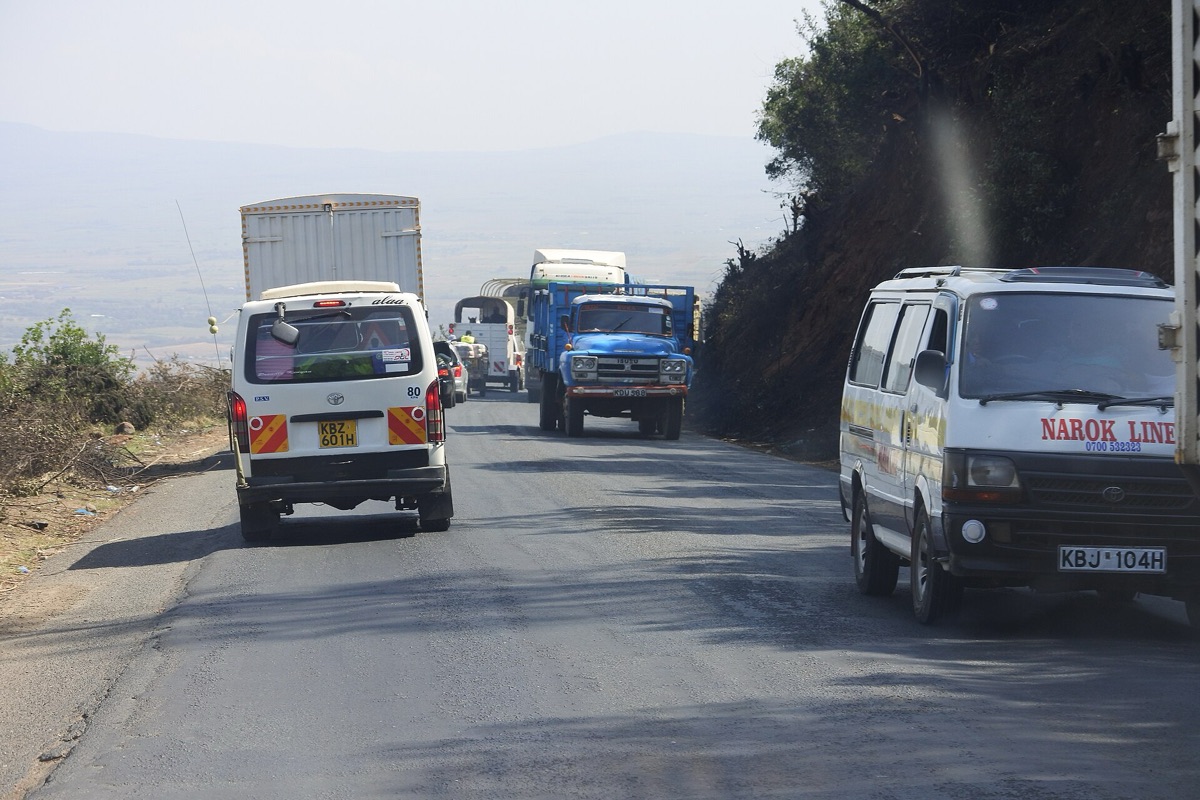
The centre line relative to the camera
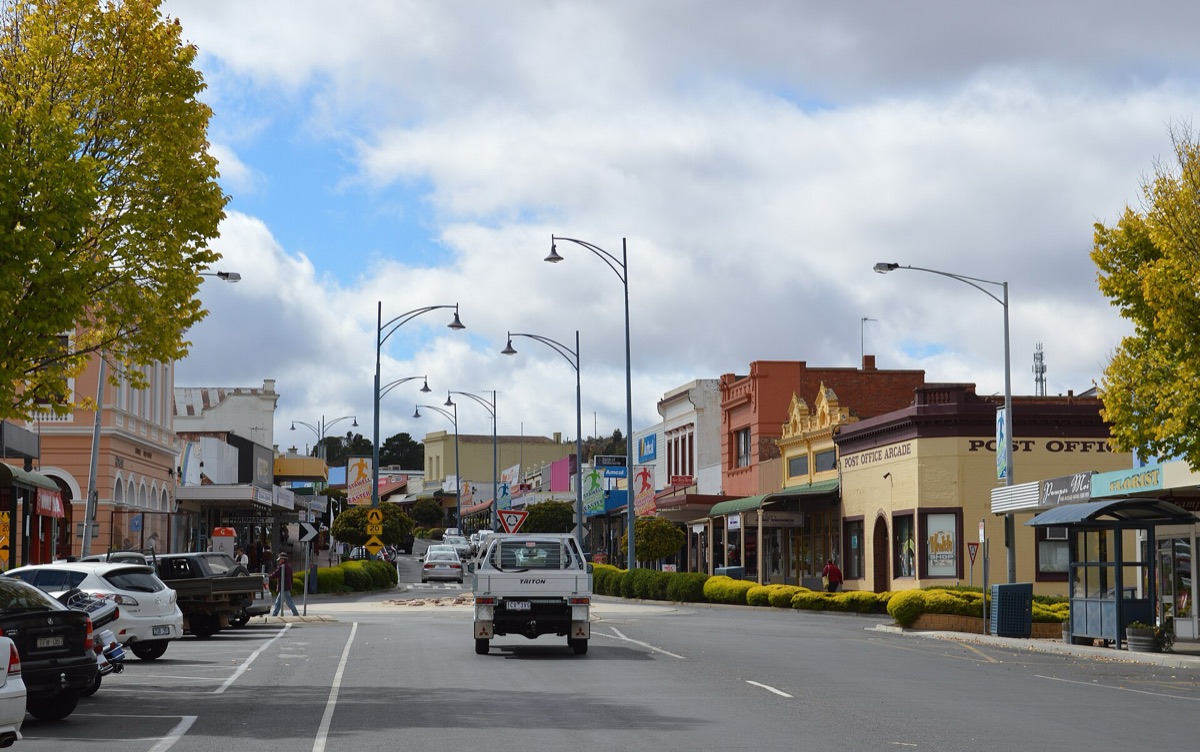
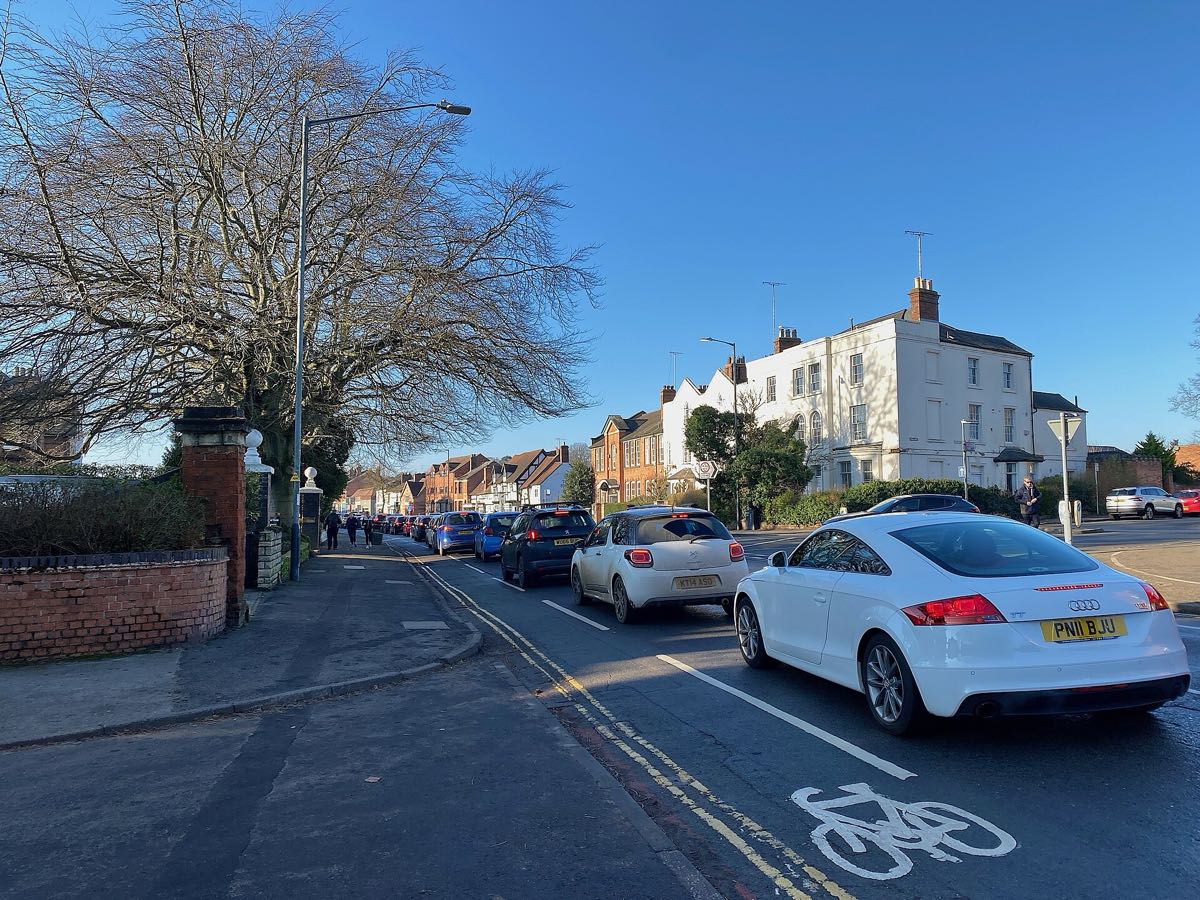
Most photos are taken from or near the roadside, so the centre line is a free reference. When the camera looks straight across the road from the kerb, the near lane in a left-driving country carries traffic moving from your right to your left. Painted lane arrows and turn arrows at junctions point in the direction of travel for their own lane, so one arrow can settle it with no traffic in the frame. A "look right" instruction painted at the kerb points the same way, with one caveat: it is also used on one-way streets and beside contraflow bus lanes, where it follows the local flow rather than the national rule.
Steering wheel position
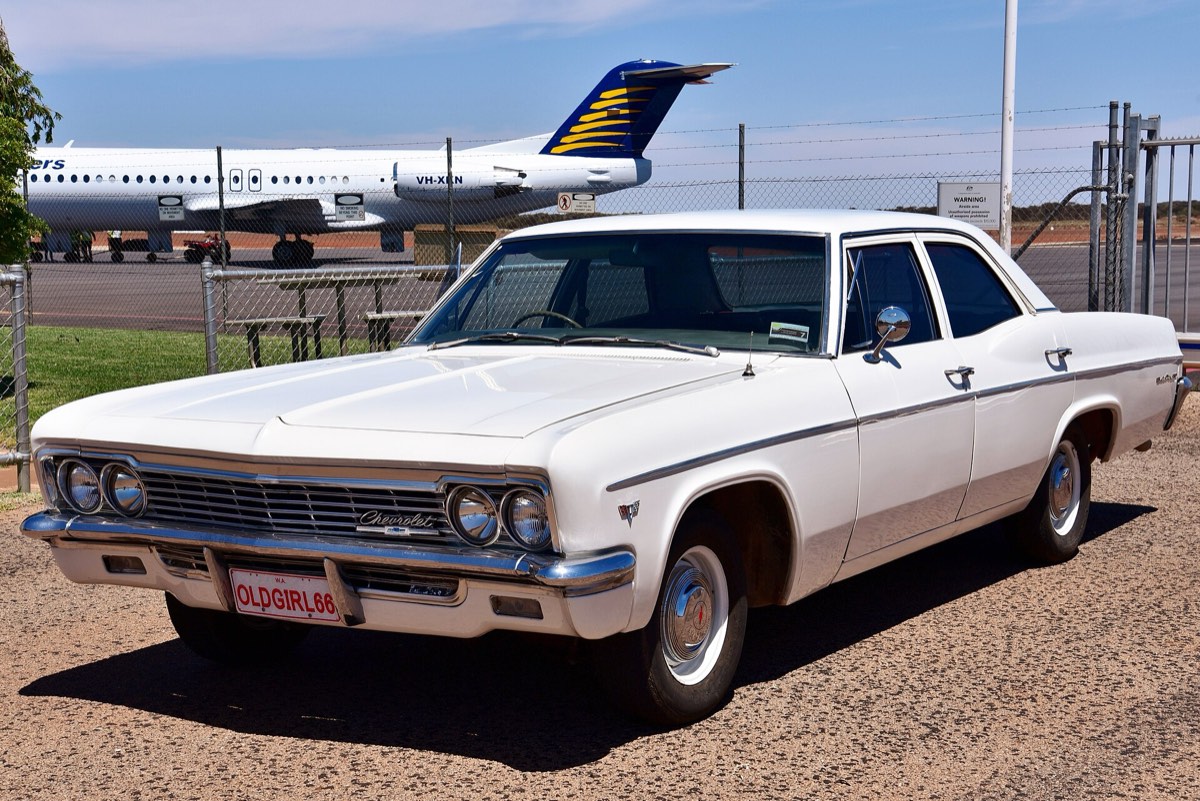
Left-hand traffic goes with right-hand drive vehicles: the steering wheel sits on the side of the car nearer the centre of the road. Look through the windscreen of any parked car, or at wing mirrors, headrests and the position of a visible driver. This is reliable in the big left-driving markets but not everywhere, and the exceptions are below.
Signs, bus stops and slip roads
Road signs face the traffic they govern, so on a left-driving road most sit on the left verge, angled slightly towards oncoming drivers. Blank sign backs on one side and printed faces on the other give you the driving side directly. Bus stops and the passenger doors of buses are on the kerbside, which is the left, and motorway slip roads, lay-bys and fuel stations all sit on the left of the carriageway they serve.
Roundabouts and junctions
Traffic on a roundabout in a left-driving country circulates clockwise, and the approach markings and the arrow signs on the central island show it even when no vehicles are present. At traffic lights, the filter arrow that gets its own phase is normally the one crossing oncoming traffic, so a dedicated right-turn filter points to left-hand traffic.
Common mix-ups
One-way streets. A one-way street tells you nothing about the driving side, and city centres are full of them. If there is no centre line, be careful: parking bays on both sides, contraflow cycle lanes and a "no entry" sign at the far end all suggest a one-way.
Parked cars. Parked cars are the weakest cue here. Rules on parking against the flow vary from country to country and are widely ignored, and angled bays and car parks scramble orientation. Use parked cars for the steering wheel, not for the way they face.
Right-hand drive cars in right-driving countries. Cheap used imports from Japan make right-hand drive vehicles common in the Russian Far East, which drives on the right. Myanmar is the extreme case: it switched from left to right in December 1970, but almost all its cars are second-hand Japanese imports, so it drives on the right in overwhelmingly right-hand drive vehicles. When steering wheel and lane position disagree, trust lane position.
Left-hand drive cars in left-driving countries. The reverse happens across the Caribbean. The United States Virgin Islands keep left but most cars are left-hand drive, because they come from the American mainland. The same mismatch shows up in the Bahamas, Bermuda, the British Virgin Islands, the Cayman Islands and the Turks and Caicos Islands.
Gibraltar. It is a British Overseas Territory with British-style signage, and it drives on the right. It switched in 1929 because of the land border with Spain.
Mirrored photos. A flipped image reverses the driving side along with everything else. Text is the giveaway: a mirrored sign, shopfront or number plate is unreadable in a very specific way. If you spot reversed lettering, flip your reading of the driving side too. If the lettering is in a script you cannot read, the guide on telling scripts apart shows what each one should look like the right way round.
Narrowing down once you know it is left-driving
Driving side is a filter, not an answer. Combine it with one other signal and you usually land on a handful of candidates. The pillar guide on guessing a country from a photo works through the full sequence.
- Left-driving and Cyrillic script: no such country exists. If you think you see Cyrillic, recheck the driving side or the script.
- Left-driving and Greek script: Cyprus only. Greece drives on the right.
- Left-driving and Portuguese-language signage: Mozambique, Macau or Timor-Leste. Portugal, Brazil and Angola all drive on the right.
- Left-driving and Dutch-language signage: Suriname. The Netherlands switched sides long ago; Suriname did not.
- Left-driving and a euro price tag: Ireland, Malta or Cyprus, the only three left-driving members of the EU and the eurozone.
- Left-driving and a white front number plate with a yellow rear plate: the British pattern, used in the UK, the Isle of Man and Jersey, and also in Hong Kong, Sri Lanka and Kenya. Cyprus used the same pairing on plates issued before June 2013. The rest of the scene splits these easily. Yellow plates at both ends mean the Netherlands or Luxembourg, which drive on the right.
- Left-driving and yellow plates front and rear on a very small car: Japan, where kei cars carry yellow plates.
- Left-driving, Latin script and tropical vegetation: the Caribbean islands, East and Southern Africa, Fiji, Papua New Guinea, the Solomon Islands, Indonesia, Malaysia and the Seychelles. Our guide to Latin alphabet letters by language helps when the signage is Latin but not English.
- Left-driving with a land border in frame: rare and useful. The Takutu River Bridge between Guyana and Brazil is the only place in the Americas where traffic changes sides, and Thailand's crossings into Cambodia, Laos and Myanmar all have changeover points.
Countries that switched sides
Switching is rare, expensive and almost always driven by neighbours. Sweden is the famous case: it moved from left to right at 5am on 3 September 1967, in an operation known as Dagen H, and most Swedish cars were already left-hand drive by then. Iceland followed in May 1968. Samoa is the only country in modern times to go the other way, moving to the left in September 2009 so it could import cheaper used cars from Australia, New Zealand and Japan.
| Place | Year | Direction |
|---|---|---|
| Gibraltar | 1929 | Left to right |
| Argentina | 1945 | Left to right |
| Uruguay | 1945 | Left to right |
| Newfoundland (now Canada) | 1947 | Left to right |
| Belize | 1961 | Left to right |
| Ethiopia | 1964 | Left to right |
| The Gambia | 1965 | Left to right |
| Sweden | 1967 | Left to right |
| Iceland | 1968 | Left to right |
| Myanmar | 1970 | Left to right |
| Sierra Leone | 1971 | Left to right |
| Nigeria | 1972 | Left to right |
| Sudan | 1973 | Left to right |
| Ghana | 1974 | Left to right |
| Timor-Leste | 1976 | Right to left |
| South Yemen | 1977 | Left to right |
| Okinawa (Japan) | 1978 | Right to left |
| Samoa | 2009 | Right to left |
Several European countries switched under German occupation or annexation between 1938 and 1944, including Austria, Czechoslovakia and Hungary, and none switched back. Okinawa is a quiet oddity: it drove on the right under American administration from 1945 and returned to the left on 30 July 1978, matching the rest of Japan. Rwanda and Burundi have both studied a move to the left to match their East African Community neighbours, but neither has committed, and no country currently has a confirmed date to change.
Practice
The fastest way to make this stick is to call the driving side on a photo before you look at anything else. You can play a free round as a guest at /try, no account needed. Each country page also has its own round, for example Japan or South Africa, so you can drill one left-driving country at a time until the lane position, the sign backs and the steering wheels all agree.