 GeoGuess
The small print on a shopfront often names the country outright. An international dialling code such as +39 or +48 is the strongest of these clues, a country web domain such as .pl or .com.au comes next, and a currency symbol such as zł, Kč or R$ on a price tag narrows things to one country or a handful. The euro, the dollar sign and a few web domains sold worldwide are the exceptions, and this guide shows how to read around them.
These clues sit on vans, shop signs, menus, posters and price tags, usually in a corner nobody else looks at. They are worth the squint, because a single phone number can beat ten minutes of reading the landscape. If the sign has words as well, combine this page with Latin letters by language or how to tell scripts apart.
Dialling codes: the plus sign is a gift
A number written with a plus sign and a country code is close to proof. Businesses that expect foreign customers, such as hotels, tour operators, export firms and delivery companies, often print the full international form. Here are the codes you are most likely to meet.
| Code | Country | Code | Country |
|---|---|---|---|
| +1 | United States, Canada and much of the Caribbean | +44 | United Kingdom |
| +7 | Russia, Kazakhstan | +45 | Denmark |
| +20 | Egypt | +46 | Sweden |
| +27 | South Africa | +47 | Norway |
| +30 | Greece | +48 | Poland |
| +31 | Netherlands | +49 | Germany |
| +32 | Belgium | +52 | Mexico |
| +33 | France | +54 | Argentina |
| +34 | Spain | +55 | Brazil |
| +36 | Hungary | +56 | Chile |
| +39 | Italy (also used for the Vatican and San Marino) | +57 | Colombia |
| +40 | Romania | +61 | Australia |
| +41 | Switzerland | +62 | Indonesia |
| +43 | Austria | +63 | Philippines |
| +64 | New Zealand | +86 | China |
| +65 | Singapore | +90 | Turkey |
| +66 | Thailand | +91 | India |
| +81 | Japan | +351 | Portugal |
| +82 | South Korea | +353 | Ireland |
| +84 | Vietnam | +358 | Finland |
Three-digit codes are common in Europe, Africa and the Middle East, and they are just as decisive: +359 Bulgaria, +380 Ukraine, +381 Serbia, +385 Croatia, +420 Czech Republic, +421 Slovakia, +212 Morocco, +254 Kenya, +852 Hong Kong, +886 Taiwan, +966 Saudi Arabia, +971 United Arab Emirates and +972 Israel.
Two codes are shared, so treat them as a region rather than a country:
- +1 is the North American Numbering Plan. It covers the United States and its territories, Canada and a long list of Caribbean states including Jamaica, the Bahamas, Barbados, the Dominican Republic, Trinidad and Tobago and Puerto Rico. Mexico is not part of it and uses +52.
- +7 is shared by Russia and Kazakhstan. Kazakhstan has the +7 6 and +7 7 ranges, so +7 7 on a sign in a Cyrillic-script town leans towards Kazakhstan.
Domestic formats: reading a number with no plus sign
Most shop signs print the number the way locals dial it, with no country code at all. The shape of that number is still a fingerprint. Two things matter: whether it starts with 0, and how many digits it has and how they are grouped.
Many countries put a trunk prefix of 0 in front of the number for domestic calls and drop it after the country code. The UK, Germany, France, the Netherlands, Australia, New Zealand, Japan and Brazil all work this way. Others have no trunk prefix at all, so their numbers never start with an extra 0: Spain, Portugal, Poland, the Czech Republic, Denmark, Norway and Greece are on that list. North America uses 1 as its trunk prefix, Russia, Belarus, Kazakhstan and Turkmenistan use 8, and Hungary uses 06.
Italy is the odd one out. Its landline numbers begin with 0, but that 0 is part of the number, so it stays after the country code: a Rome number is written +39 06 and so on. Italian mobiles start with 3.
| Country | What a typical number looks like | Tell-tale detail |
|---|---|---|
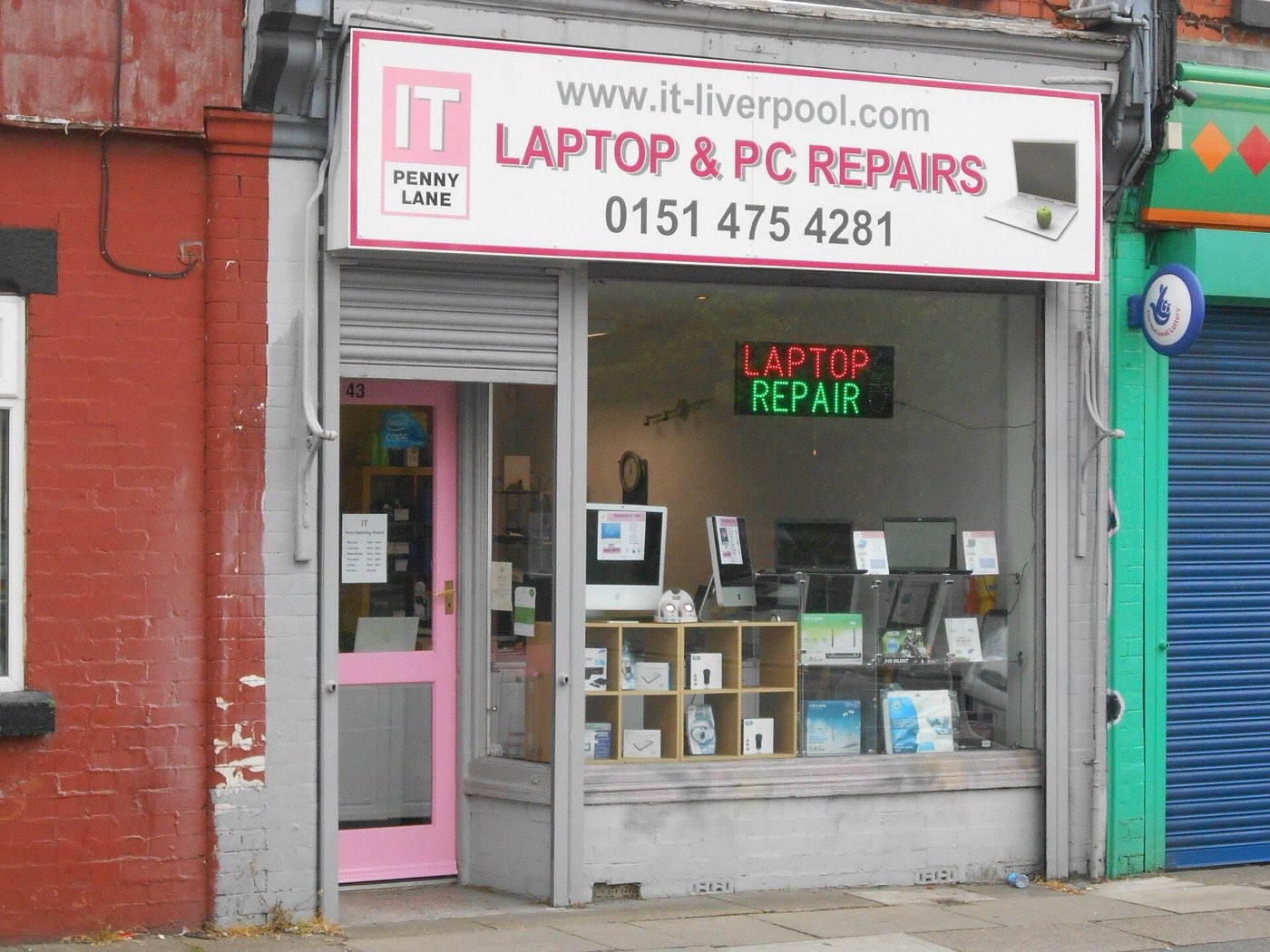
| United Kingdom | 0151 475 4281, 020 xxxx xxxx, 07xxx xxxxxx | 11 digits with the 0, mobiles start 07, London is 020 |
| France | 01 xx xx xx xx | 10 digits in five pairs, mobiles start 06 or 07 |
| Netherlands | 06 xx xx xx xx, 020 for Amsterdam | 10 digits with the 0, mobiles start 06 |
| Spain | 9xx xxx xxx, 6xx xxx xxx | 9 digits, no 0, landlines start 9 (or 8), mobiles 6 or 7 |
| Poland | 12 262 79 73, 5xx xxx xxx | 9 digits, no 0, mobiles often in three groups of three |
| Italy | 06 xxxx xxxx, 3xx xxx xxxx | landlines start 0 and keep it abroad, mobiles start 3 |
| Germany | 030 xxxxxxxx, 0171 xxxxxxx | lengths vary by area, mobiles start 015, 016 or 017 |
| Hungary | 06 1 xxx xxxx | domestic long-distance calls start 06 |
| United States and Canada | (212) 555-0123 or 212-555-0123 | 10 digits in 3, 3 and 4, toll-free 800, 888, 877 and similar |
| Australia | 04xx xxx xxx, (02) xxxx xxxx | 10 digits with the 0, mobiles 04, toll-free 1800 |
| Brazil | (11) 9xxxx-xxxx | two-digit area code in brackets, mobiles have nine digits starting with 9 |
| Japan | 03-xxxx-xxxx, 090-xxxx-xxxx | hyphens, mobiles 070, 080 or 090, toll-free 0120 |

Some patterns are worth learning by sight. French numbers in pairs (0x xx xx xx xx) are very recognisable. A Brazilian number in brackets with a hyphen near the end, such as (21) 9xxxx-xxxx, is hard to mistake for anything else. Japanese numbers are full of hyphens and the free-dial prefix 0120 is everywhere on Japanese vans and leaflets. A UK number starting 07 is a mobile, while long geographic codes such as 0151 for Liverpool point to a region as well as a country.
Old signs can carry short numbers from before a country lengthened its numbering, so a sign with only six or seven digits is not necessarily foreign. Poland, Spain and many others moved to longer formats within living memory, and plenty of painted signs were never updated.
Web domains: the end of the address
A country-code top-level domain is the two-letter ending of a web address. Nearly all of them match the country's ISO two-letter code: .it, .pl, .de, .fr, .es, .pt, .cz, .hu, .ro, .se, .no, .dk, .fi, .gr, .tr, .ru, .ua, .jp, .kr, .cn, .in, .br, .mx, .ar, .za. The best-known exception is the United Kingdom, which uses .uk rather than .gb.
Several countries put a second level in front of the country code, and the pair is a stronger signal than the country code alone because these combinations are mainly used by local businesses.
| Ending | Country | Note |
|---|---|---|
| .co.uk | United Kingdom | most .uk sites sit under .co.uk, plain .uk has been available since 2014 |
| .com.au | Australia | the vast majority of Australian registrations, plain .au opened in 2022 |
| .com.br | Brazil | over 90 per cent of Brazilian registrations |
| .co.jp | Japan | reserved for companies registered in Japan |
| .co.za | South Africa | most South African domains, plain .za is not offered |
| .com.tr | Turkey | the usual commercial ending; names directly under .tr are a recent addition |
Two endings point to a bloc rather than a country. The .eu domain is open to people and companies based in the European Union, and .com, .net and .org belong to nobody. American businesses mostly use plain .com, so a sign with only a .com address and no other clue is weak evidence of anything.
Domains sold to the whole world
Some small countries and territories market their domain globally, often because the two letters spell something useful in English. Seeing one of these on a sign tells you very little about where the sign is.
| Ending | Belongs to | Why it is everywhere |
|---|---|---|
| .io | British Indian Ocean Territory | popular with tech start-ups (input/output) |
| .co | Colombia | marketed as a global alternative to .com |
| .tv | Tuvalu | television and streaming brands |
| .me | Montenegro | personal sites and word plays |
| .ly | Libya | words ending in -ly |
| .ai | Anguilla | artificial intelligence companies |
| .fm | Federated States of Micronesia | radio stations and podcasts |
| .gg | Guernsey | gaming sites |
| .nu | Niue | nu means now in Danish, Dutch and Swedish, so it is popular in those countries |
The .nu case is a nice twist: it does not mean Niue, but it does hint at Sweden, Denmark or the Netherlands.
Currency symbols on price tags
Price tags, menus, fuel price boards and market stalls are the places to look. Where a currency has a symbol of its own, it can point to one country. Remember that symbols are informal: the international standard only defines three-letter codes such as PLN or CZK, and you will see those too, especially on chain store labels.
| Symbol or abbreviation | Currency | Where |
|---|---|---|
| zł | złoty (PLN) | Poland |
| Kč | koruna (CZK) | Czech Republic |
| Ft | forint (HUF) | Hungary |
| lei | leu (RON, MDL) | Romania, Moldova |
| din | dinar (RSD) | Serbia |
| ₺ or TL | lira (TRY) | Turkey |
| ₽ | rouble (RUB) | Russia |
| ₴ | hryvnia (UAH) | Ukraine |
| ₸ | tenge (KZT) | Kazakhstan |
| ₾ | lari (GEL) | Georgia |
| ₼ | manat | Azerbaijan, Turkmenistan |
| ₪ or NIS | new shekel (ILS) | Israel |
| ₹ | rupee (INR) | India |
| ฿ | baht (THB) | Thailand |
| ₫ | đồng (VND) | Vietnam |
| ₩ | won | South Korea, North Korea |
| ₱ | peso (PHP) | Philippines |
| Rp | rupiah (IDR) | Indonesia |
| RM | ringgit (MYR) | Malaysia |
| R$ | real (BRL) | Brazil |
| R | rand (ZAR) | South Africa, also legal tender in Lesotho, Namibia and Eswatini |
| S/ | sol (PEN) | Peru |
| Q | quetzal (GTQ) | Guatemala |
| ₦ | naira (NGN) | Nigeria |
| ₡ | colón (CRC) | Costa Rica |
| CHF | franc | Switzerland, Liechtenstein |
| £ | pound sterling | United Kingdom (Egypt and Lebanon also use £ in Latin-script abbreviations for their own pounds) |
kr: four Nordic countries
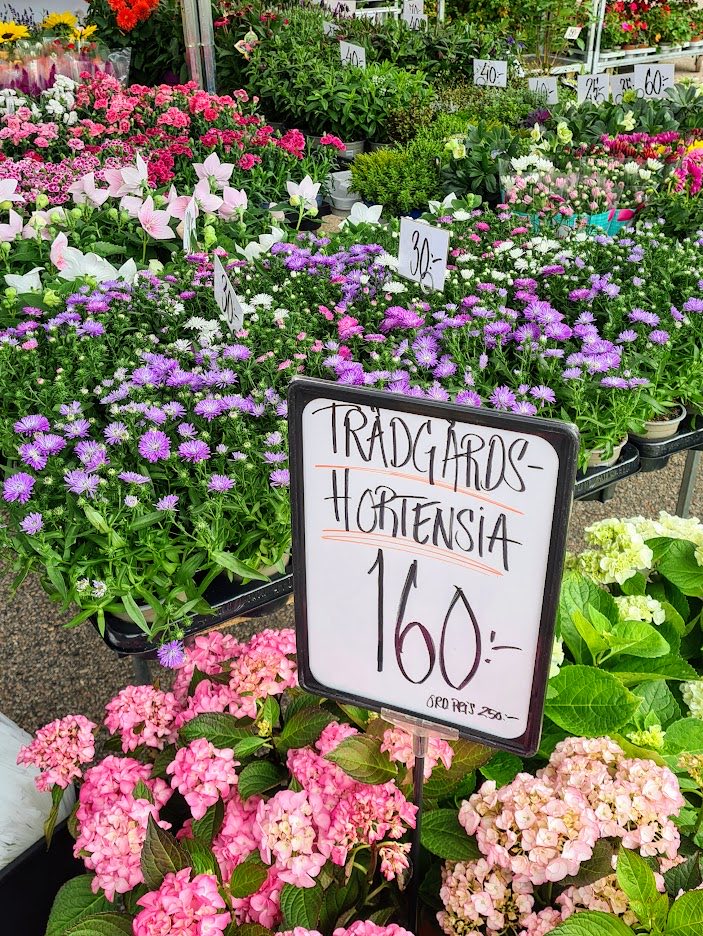
The abbreviation kr is shared by the Danish krone, the Norwegian krone, the Swedish krona and the Icelandic króna. The Danish krone also covers Greenland and the Faroe Islands, where it comes with Faroese banknotes. So kr tells you Nordic, and the language on the rest of the sign tells you which country. Swedish market stalls and supermarkets often write a round price as 160:- instead of 160 kr.
The euro: a club of 21, plus friends
The euro sign narrows the field but rarely closes it. Since Bulgaria joined on 1 January 2026, the euro area has 21 members: Austria, Belgium, Bulgaria, Croatia, Cyprus, Estonia, Finland, France, Germany, Greece, Ireland, Italy, Latvia, Lithuania, Luxembourg, Malta, the Netherlands, Portugal, Slovakia, Slovenia and Spain. Andorra, Monaco, San Marino and the Vatican use it by agreement, Kosovo and Montenegro use it without one, and a few overseas territories use it too.
Bulgaria is a fresh trap. Shops there had to show prices in both leva (лв) and euros from August 2025 to August 2026, and the lev stopped being legal tender on 1 February 2026, so old photos and faded signs may still show лв.
Inside the eurozone, use the format and the language. A price written €2.50 with a point and the symbol in front suggests Ireland, because most of the eurozone uses a decimal comma, as in 2,50 €.
The dollar sign and the yen sign
The $ sign belongs to dozens of currencies. It is used for the US, Canadian, Australian, New Zealand and Hong Kong dollars and for the pesos of Mexico, Argentina, Chile and Colombia, among others. Ecuador, El Salvador and Panama use the US dollar itself. Look for a prefix: US$, CA$, NT$ (Taiwan), MOP$ (Macau), C$ (Nicaragua) or R$ (Brazil) are all far more specific than a bare $.
The ¥ sign is used for both the Japanese yen and the Chinese yuan. In Japan the price is usually written with 円 after the number, as in 500円. In China you are more likely to see 元 after the number, and when the two need telling apart in Latin text you may see CN¥ or RMB. The script around the price, kana for Japan and simplified characters for China, usually decides it faster.
Decimal comma or decimal point
How a price is punctuated is a quieter clue, but it splits the world into two large camps.
| Writes | Example | Typical countries |
|---|---|---|
| Decimal point, comma for thousands | 1,299.50 | UK, Ireland, US, English-speaking Canada, Mexico, Australia, China, Japan, India, Malaysia, the Philippines, Thailand |
| Decimal comma, point for thousands | 1.299,50 | Brazil, Argentina, Germany, Italy, Turkey, Indonesia, Vietnam |
| Decimal comma, space for thousands | 1 299,50 | France, Poland, the Czech Republic, Russia, Sweden, French-speaking Canada |
| Apostrophe for thousands | 1'299.50 | Switzerland, especially for money |
| Lakh grouping | 1,00,000 | India, Nepal, Bangladesh, Pakistan |
A few things to keep in mind. Usage is not perfectly tidy: South Africa officially uses a comma but English-language prices often use a point, and Switzerland uses a point for prices even though the comma is its official decimal sign. Countries with big round numbers, such as Indonesia, Vietnam or South Korea, often have no decimals at all on a price tag, so look at how the thousands are split instead: 25.000 suggests Indonesia or Vietnam, 25,000 suggests South Korea or Japan. Indian lakh grouping, with pairs of digits after the first three, is one of the few formats that points to South Asia by itself.
When the small print lies
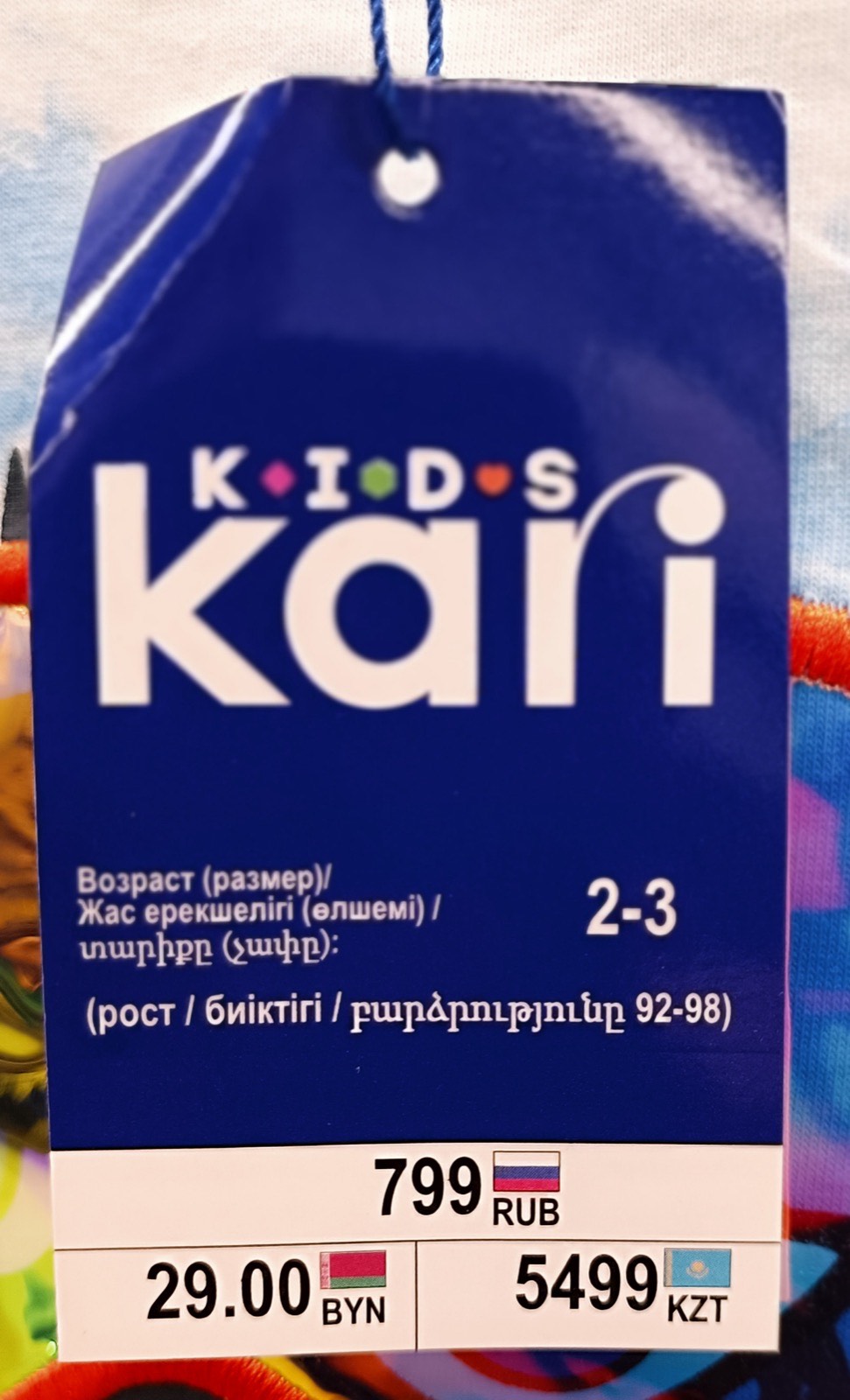
Not every number on a sign is local. A van may carry a head-office number from another country, a shop selling imported goods may print the supplier's web address, and a tourist menu may show prices in a neighbouring currency. Chain stores in several countries often print one tag with every country's price on it, as in the photo above. Treat small print as one clue, then look for a second independent one, such as the language, the side of the road or the landscape, before you commit.
The order of strength is roughly this:
- A full international number with a plus sign.
- A local number with a distinctive shape, such as French pairs or a Brazilian (11) 9xxxx-xxxx.
- A local business domain such as .co.uk, .com.au or .pl.
- A unique currency symbol such as zł, Kč, Ft or R$.
- A shared symbol (€, $, ¥, kr) combined with the language and number format.
Quick checklist
- Plus sign? Read the code: one to three digits name the country. +1 and +7 are regions, not countries.
- No plus sign? Count the digits and check for a leading 0. Nine digits and no 0 suggests Spain, Poland or Portugal. Pairs of two suggest France.
- Web address? Look past .com to the ending. Second-level pairs such as .co.uk, .com.au, .com.br or .co.za are strong. Ignore .io, .co, .tv, .me, .ly and .ai.
- Price tag? A unique symbol names the country. € means one of 21 eurozone members or six other users, $ means one of dozens, kr means Nordic, ¥ means Japan or China.
- Punctuation? 2,50 against 2.50 splits continental Europe and Latin America from the English-speaking world and much of Asia.
- Second clue? Confirm with the language or the road before you place your pin.
Practice
Open a free guest round at /try and give yourself one job per photo: before you look at the landscape, scan every sign, van and price tag for a number, a web address or a currency. You will be surprised how often a corner of a shopfront does the work for you. Every country page also has its own round, for example Poland, Brazil or Japan, which is the quickest way to learn what local phone numbers and prices look like.